Wesley’s Story: Rediscovering Life’s Joys
February 19, 2025
Wesley’s Story: Rediscovering Life’s Joys
February 19, 2025

Wesley's Story

After falling from a scaffolding tower and suffering a traumatic brain injury, Wesley was paralyzed until a miraculous surgery gave him new hope. With the help of NEURO RehabCare’s physical therapy, he gained mobility and independence. Wesley’s recovery has been a true testament to the transformative power of our neurorehabilitation and spinal cord injury rehabilitation programs. He loves the support from the NRC team, the resources, and the sense of community he found here. 


Wesley's accident happened in 2015 on July 2nd. "My Dad and I owned a construction company. We knew what to do and how to do it when it came to construction of any sort. I was helping my Godfather with roofing on his farmhouse, using a scaffolding tower. I fell from this tower, hitting my forehead hard enough to fracture my skull. I had a compound fractured disc causing my current spinal cord injury."


Wesley was paralyzed until a miraculous surgery was scheduled years after his accident! Post-surgery, Wesley was gaining more mobility in his legs and arms, and with some movement increasing in his fingers. With a brain bleed in his left cerebral, Wesley's short-term memory has not been as strong as it once was. Typically, this type of injury might also impact personality shifts, but Wesley still has his sharp personality!


NEURO RehabCare was not Wesley's first restorative company house. He went from house to house since his accident. "I don't mean to sound bias, I'm just being honest when I say that NEURO RehabCare is the best place I've lived in! I love the people; this place has made a large difference in my life - to live in a facility that offers in-home physical and occupational therapy."


I asked Wesley about his family and any relationships outside of the NEURO RehabCare community. While most family members have passed on, Wesley's sibling lives closest to him, at two hours away. Due to a distanced relationship, Wesley has found family in NEURO Rehabcare. 


Wesley went on to say: "I love the support from everyone here! This is the best place because of it's resources alone. This company has more resources than in other homes I've lived in. It feels so good to be independent here, while having the support I know I need."


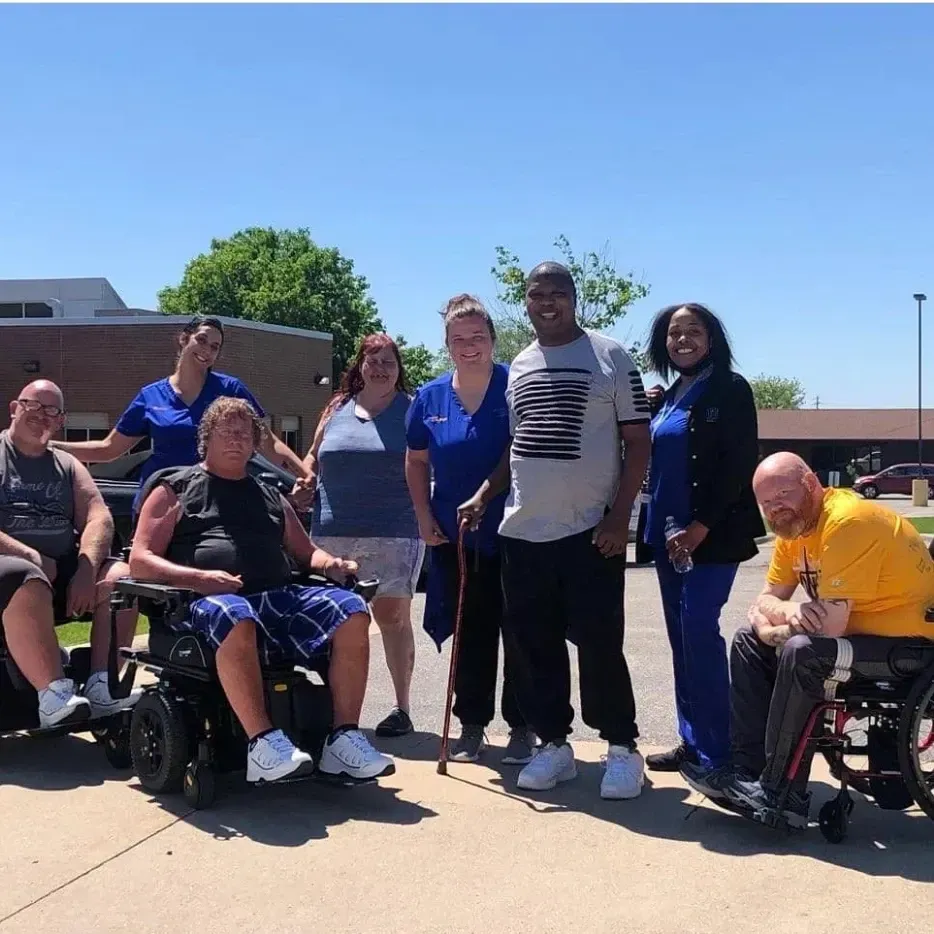
Wesley went on to share a few of his favorite things to do with his NRC family. He enjoys going out with the group, especially when they visit the river! He can hardly wait to go fishing again. His favorite place to eat with the group is at the local Applebees. Wesley has gained more and more permissions to be so independent, even enjoying a cold beer when out to dinner with his favorite people and staff. While interviewing Wesley, he was anxiously awaiting his personal belongings. On this day, the staff had gone to move his things into his room with him. He was so excited to feel even more settled and at home. Some of these staff members came in to help Wes, even on their day off.


Wesley has found family at NEURO Rehabcare. This is a strong community and support system for Wesley, and he is endlessly grateful for them.
By Jimmy Moody May 29, 2026
Choosing the right stroke recovery program in Des Moines, IA, means comparing therapy intensity, medical staffing, inpatient versus outpatient care, facility accreditation, and long-term support. Families should look for programs that offer personalized rehabilitation plans, experienced neurological specialists, caregiver education, and evidence-based therapies that support safe and effective brain recovery after stroke. Why Choosing the Right Stroke Recovery Program Matters Stroke recovery is rarely a one-size-fits-all process. Every stroke affects the brain differently, which means rehabilitation needs vary from patient to patient. Some individuals regain mobility within weeks, while others require months of therapy and structured support. Research from the American Stroke Association shows that nearly 75% of stroke survivors experience some form of long-term disability. Early and consistent rehabilitation significantly improves mobility, speech, balance, and independence. Families in Des Moines, IA, often feel overwhelmed when comparing rehabilitation options. Understanding the differences between programs helps patients receive care that matches their medical condition, recovery goals, and daily living needs. Should You Choose Inpatient or Outpatient Stroke Rehabilitation? One of the first decisions families face is whether inpatient or outpatient rehabilitation is the better fit. What Is Inpatient Stroke Rehabilitation? Inpatient rehabilitation provides 24-hour medical supervision in a hospital or specialized rehab facility. Patients stay on-site while receiving intensive therapy several hours each day. The best inpatient rehab for stroke patients near Des Moines, IA, typically includes: Neurologists and rehabilitation physicians Physical therapy Occupational therapy Speech-language therapy Nursing care is available around the clock Fall prevention monitoring Medication management Inpatient care is often recommended for: Severe mobility limitations Swallowing difficulties Cognitive impairments High fall risk Patients needing close medical supervision What Is Outpatient Stroke Rehabilitation? Outpatient therapy allows patients to live at home while attending scheduled therapy sessions during the week. Outpatient rehabilitation may work well for individuals who: Have stable medical conditions Can safely move around at home Have transportation support Need continued therapy after inpatient discharge Many stroke rehabilitation therapy and program providers offer outpatient services focused on strengthening, coordination, speech improvement, and daily task training. How Much Therapy Is Enough for Stroke Recovery? Therapy intensity plays a major role in recovery outcomes. Studies published by the National Institutes of Health suggest that higher therapy repetition improves neuroplasticity, which is the brain’s ability to create new neural pathways after injury. Programs offering structured daily rehabilitation often help patients improve: Walking ability Hand and arm coordination Balance Speech clarity Memory and cognition Independence with daily activities Signs of a Strong Rehabilitation Program Look for programs that provide:
By Jimmy Moody February 2, 2026
I spent 3 months in a hospital and rehab center in Houston, Texas after I had a work-related accident that left me with a severe traumatic brain injury (TBI). When I was well enough to return to Arizona, I arrived at Neuro RehabCare on March 4, 2025 and was getting physical therapy, occupational therapy, and speech the
A group of people posing for a picture including a man wearing a shirt that says champions
February 19, 2025
Dennis’s journey at NEURO RehabCare has been about more than just physical recovery; it’s been about finding a sense of belonging and support. After experiencing a spinal cord injury, Dennis faced numerous challenges, but his perseverance and the encouragement of the NEURO RehabCare community helped him regain...